10/21/2026

The Payout Problem Nobody Warned Us About: Getting Paid Across Southeast Asia’s QR Rails

Robert Sterling – SeaPRwire – A hotel in Cebu lost a booking last March because of a QR code. Not a broken one — a missing one. A guest from Singapore stood at the front desk with her banking app open, ready to pay, and there was nothing to scan. She paid in cash from an ATM down the road, complained in a review the same evening, and the property’s operations manager spent the next two weeks explaining to ownership why a “cashless” property needed a cash float again.

That is the shape of the problem most Southeast Asian businesses actually have with payments in 2026. It is not fraud, and it is not interchange. It is that the person standing in front of you has already decided how they want to pay, and your checkout was built for a card.

This is a practical guide to the rails that matter, what they cost, how long money takes to arrive, where it gets stuck, and which countries quietly make it hard to take your own money out.

Cards are not the default here

A merchant entering Southeast Asia with Visa and Mastercard acceptance and nothing else has already lost most of the market. Cards account for under 15 percent of potential customers across most ASEAN markets. In Thailand, account-to-account payments make up 44 percent of e-commerce value. In the Philippines, GCash alone has more users than most countries have adults, and GrabPay, GoPay, OVO, DANA, TrueMoney, and Touch ‘n Go each hold meaningful share at home.

The region runs instead on government-built real-time rails and QR standards, and they are not “alternative payment methods” in the way buy-now-pay-later is in Europe. They are the default. Research points to local payment methods representing 69 percent of Asia Pacific e-commerce transaction value by 2028, up from 64 percent in 2023, with non-card wallets reaching 57 percent. The trajectory is away from cards, not toward them.

The reason is partly cultural, but mostly structural. These rails were built by central banks to bring unbanked populations into the financial system, and they priced merchant acceptance at near zero to make that work. A QR payment costs a merchant far less than a card transaction — estimates run 50 to 80 percent lower in acceptance cost — and that pricing floor is very hard for card networks to match.

The five rails that matter

Every market built its own. That is the single most expensive fact in this article.

Market Real-time rail Operator QR standard Settlement
Singapore PayNow (over FAST) ABS / BCS SGQR Near-instant
Malaysia DuitNow (RPP) PayNet DuitNow QR Near-instant
Thailand PromptPay ITMX Thai QR Near-instant
Indonesia BI-FAST Bank Indonesia QRIS Near-instant
Vietnam NAPAS 247 NAPAS VietQR Near-instant
Philippines InstaPay / PESONet BSP QR Ph Instant / same-day


Each has its own integration standard, settlement timing, and local partner ecosystem. An institution offering collections across five markets is not building “an ASEAN offering.” It is building five distinct market capabilities that happen to sit next to each other on the map.

The scale behind these rails is larger than most outsiders assume. Indonesia’s QRIS has passed 56 million users and roughly 38 million merchants. Malaysia’s DuitNow QR doubled to 3 billion transactions. PromptPay carries 74 million registered users and processes over 74 million transactions daily.

Cross-border QR actually works now

The interesting development of the last eighteen months is that these national systems started talking to each other. This is genuinely new, and it changes the calculus for merchants whose customers cross borders.

Cross-border QR payments work through interoperable regional networks. A visitor from Singapore opens a PayNow-enabled banking app, scans a Philippine merchant’s QR code, and approves the payment in SGD from her Singapore account. The merchant receives the equivalent in PHP. The merchant does not need a foreign currency account. There is no currency exchange at the point of sale.

Settlement timing differs from domestic transactions, and it is the detail most merchants get wrong when modelling cash flow: domestic transactions settle next business day in local currency; cross-border QR transactions take longer — typically T+1 to T+2 calendar days depending on the corridor and provider. Plan for that gap during peak tourist periods.

By 2026, cross-border QR was live across Indonesia, Thailand, Singapore, Malaysia, and the Philippines, with more than 30 digital payment schemes supported through shared infrastructure. Singapore’s PayNow also links to India’s UPI. ASEAN had 29 cross-border payment linkages processing 36.2 million transactions worth about USD 716 million in one reported period, and the Regional Payment Connectivity initiative kept adding to that.

Project Nexus — the BIS Innovation Hub scheme operated through Nexus Global Payments in Singapore — was on track for rollout in 2026, connecting the instant payment systems of India, Malaysia, the Philippines, Singapore, and Thailand through a central gateway. If that lands as expected, the plumbing gets materially simpler for anyone serving several markets at once.

The licensing wall nobody budgets for

Here is where optimistic expansion plans usually die. Each market regulates money movement separately, and no regional passport exists.

Market Regulator Representative licence Indicative timeline
Singapore MAS Major Payment Institution ~2 years
Malaysia Bank Negara Malaysia Money Services Business 2+ years
Philippines BSP Remittance & Transfer Company / EMI ~1 year
Indonesia Bank Indonesia Payment Service Provider (PJP) ~2 years
Thailand Bank of Thailand / MoF Designated Payment Service ~3 years
Vietnam State Bank of Vietnam Intermediary Payment Service 3+ years


A licence held in Singapore does not extend to IDR flows in Indonesia or VND collections in Vietnam. For most businesses that means either pursuing local licensing market by market — a multi-year undertaking — or working through local partners, each adding counterparty risk, commercial negotiation, and operational oversight to the stack.

The practical consequence: unless you are a payments company, do not try to hold licences. Use a licensed local provider in each market and accept that you are assembling a patchwork rather than buying a platform.

The trap nobody warns you about: getting your own money out

This is the section most guides skip, and it is where operators lose real money.

Some ASEAN currencies carry capital controls, restricted convertibility, or repatriation rules that do not apply to SGD or USD. The Indonesian rupiah, the Vietnamese dong, and to a lesser extent the Philippine peso and Thai baht all sit somewhere on that spectrum. Funds collected locally cannot always be freely converted and moved out.

Market Convertibility What it means operationally
Singapore Fully convertible Standard FX hedging available, freely deliverable
Malaysia Not internationalised Offshore MYR trading not recognised; FX must transact onshore
Philippines Largely convertible (current account) Deliverable onshore, often hedged via NDF
Indonesia Heavily controlled Onshore rails plus documentation trail for every conversion
Vietnam Non-convertible offshore VND cannot be traded outside Vietnam; FX needs documented purpose


For a business running treasury across several markets, this creates genuine balance-sheet exposure: cash trapped onshore, unpredictable conversion timing, and pressure to accept unfavourable rates to unwind positions quickly. Model this before you open the second market, not after.

Choosing a provider, honestly

The honest answer is that no single platform covers all of ASEAN well, and any vendor that claims otherwise is describing aspirational coverage rather than live capability. What you are really choosing is how much fragmentation you will manage yourself.

The trade-offs worth weighing explicitly: local payment method depth versus breadth of markets; whether the provider holds its own licence or rides on a partner’s; settlement speed and whether it varies by rail; what happens when a transaction fails; and whether reconciliation actually reconciles, which is where operators lose the most staff hours.

A mid-sized regional business typically ends up with two or three providers rather than one. That is not a failure of planning. It is the current shape of the market. The mistake is assuming you can consolidate later without redoing integrations.

Provider type Strength Watch out for
Regional PSP with broad local methods Fastest route to real coverage Settlement varies by corridor; check per-rail terms
Card-first global gateway Familiar integration, strong fraud tooling Thin local rail coverage; poor non-card conversion
Orchestration layer One API across many providers Adds cost; still needs underlying local licences
Local bank acquiring Best pricing on that rail One market only; slow to extend


How this differs country by country

Country-level differences are large enough that a single regional playbook will produce bad decisions.

Indonesia — QRIS is the gravity well, with 56 million-plus users. But IDR is heavily controlled, so plan repatriation before you plan acquisition. Documentation discipline matters more here than anywhere else in the region.

Philippines — Strong English capability makes integration easier, but the payment mix is fragmented across GCash, Maya, QR Ph, InstaPay, and PESONet, plus over-the-counter networks that matter enormously outside Metro Manila. Tourism-facing businesses should treat cross-border QR as baseline, not premium.

Thailand — PromptPay is deeply embedded, and tourists from neighbouring markets increasingly expect to pay through linked rails. Watch household-debt-driven softness in domestic consumption when forecasting.

Vietnam — VietQR is growing quickly, but VND offshore restrictions are the binding constraint. Build the compliance path first.

Malaysia — DuitNow QR doubled to 3 billion transactions. MYR must settle onshore, which shapes treasury design more than most operators expect.

Singapore — The most mature and most expensive. PayNow is table stakes, but Singapore is usually where you incorporate and bank, not where your volume sits.

Mistakes that cost money

Assuming card-first economics still apply. They do not. Budget as though cards are a fallback, because that is what they are for most of your customers.

Modelling cross-border settlement as same-day. It rarely is. That gap shows up as working capital.

Treating one licence as regional. It is not. Every additional market resets the clock.

Ignoring reconciliation until month three. Manual reconciliation across five rails with different reference formats consumes finance headcount faster than any other operational issue here.

Discovering repatriation rules after collecting the money. This is the expensive one.

Questions businesses actually ask

Do I need a local entity to accept payments? Usually not to accept, but often yes to settle directly or to hold a licence. Working through a licensed local provider sidesteps this for most merchants.

Is cross-border QR worth enabling for a small business? If your customers include travellers or overseas buyers, yes — the incremental cost is low and the alternative is losing the sale entirely. The service businesses, tour operators, and boutiques that benefit most are the ones with regular foreign footfall.

Will Project Nexus remove the fragmentation? Not entirely. It meaningfully reduces integration complexity across connected markets, but licences, currency rules, and reconciliation remain local problems.

How long before this is genuinely simple? Realistically, several years at best, and probably not completely.

What the money actually costs, line by line

Most operators budget for a headline transaction fee and get surprised by everything around it. The real cost of accepting a payment in this region has four layers, and only the first appears on the pricing page.

  1. Acceptance cost. This is the merchant discount rate, and it is where local rails win outright. QR acceptance typically runs far below card interchange — the central-bank mandate to serve small merchants with cheap acceptance is why adoption happened at all. Expect QR and real-time transfer costs to sit well under 1 percent at most volumes, against card rates that can run several times that once cross-border and rewards cards are mixed in.
  2. FX spread. If a customer pays in SGD and you settle in PHP, someone converts that money, and the spread is rarely the interbank rate. This is usually the largest invisible cost in a cross-border setup, and it is the one most often quoted as “free” in marketing. Always ask for the spread expressed as a percentage above mid-market, not just whether conversion is available.
  3. Settlement float. Money in transit is money unavailable. If cross-border QR settles T+2 rather than next business day, a business turning over PHP 3 million a month is carrying roughly two days of working capital at all times. That has a financing cost, even if nobody books it as one.
  4. Reconciliation labour. This is the one that quietly dominates for smaller operators. Each rail generates references in a different format, settles on a different schedule, and reports failures differently. A finance officer spending six hours a month per market matching payments is a real cost line, and it scales linearly with the number of rails you accept.

The arithmetic that matters: a merchant paying 0.8 percent on a local rail plus a 1.5 percent FX spread plus two days of float is often paying less than a merchant paying 3 percent on a card with instant settlement — but only if volume is high enough for the float to be forecastable. Below a certain monthly turnover, the slower rail is genuinely worse for cash flow regardless of headline pricing.

A worked example: the tour operator’s cash cycle

Consider a dive operator in Davao taking bookings from Singaporean, Malaysian, and domestic visitors. Before enabling cross-border QR, roughly 40 percent of foreign enquiries that reached the payment stage dropped out — the booking form offered card or bank transfer, and neither matched how the customer habitually paid. Of those lost bookings, the operator estimated that about half were recoverable if the visitor could pay from their home app.

After enabling PayNow, DuitNow, and QRIS acceptance alongside QR Ph for domestic guests, recovery improved, but the cash cycle changed shape. Domestic bookings settled next business day. Cross-border bookings settled on a T+2 calendar-day cycle. For a business whose deposits fund equipment rental and boat fuel before the guest arrives, that two-day gap mattered more than the fee difference — particularly during Chinese New Year and summer peaks, when a week of concentrated bookings could leave several hundred thousand pesos in transit simultaneously.

The lesson generalises: enabling more rails raises conversion and lengthens your cash conversion cycle at the same time. Both effects are real. The mistake is counting the first and discovering the second during your busiest month.

When cross-border QR is not worth enabling

It is not universally the right move, and saying otherwise does merchants a disservice.

Skip or defer it when your customer base is overwhelmingly domestic, when your average ticket is large enough that customers will accept a card or transfer anyway, or when you lack the staff to handle reconciliation across additional rails. A B2B manufacturer invoicing three buyers twice a month does not need five payment methods; it needs reliable settlement on one.

The businesses that clearly benefit are those with regular foreign footfall — tourism-facing retail and F&B in places like BGC, Intramuros, Boracay, and Cebu; export-linked e-commerce selling to Southeast Asian buyers; event and trade-show operators; and service businesses invoicing overseas clients who hold no local bank account. For those, acceptance is increasingly a baseline requirement rather than a premium feature.

Which rail to launch first

Teams routinely ask which single market to integrate first, and the answer is less about market size than about what the first integration teaches you. Start in the market where your own entity already sits, because licence questions, bank onboarding, and FX behaviour are all easier where you already have local standing. Your first integration will surface every gap in your reconciliation tooling, and it is far better to find those gaps somewhere you already understand the language, the banking hours, and the regulator.

Once that first rail is stable, the sequencing that usually works is: add the market sharing the most customers with the first, then the market whose foreign tourists most often appear in your funnel, then everything else. What rarely works is trying to launch three markets simultaneously because regional coverage looks achievable on a provider’s coverage map. Every integration you run in parallel multiplies the number of failure modes you have not yet diagnosed, and it is much harder to tell whether a problem lives in your integration, the provider, or the local rail.

One practical rule worth adopting: do not add a second rail until the first one has run for a full month with clean reconciliation. A single clean month tells you whether your reference formats, failure handling, and payout timing are genuinely working, and that knowledge transfers to the next market with very little adjustment.

Glossary

  • Real-time rail — A national instant payment network operated or overseen by the central bank, moving funds between accounts in seconds.
  • QR interoperability — The arrangement that lets a customer scan a merchant QR using a wallet or banking app from a different country.
  • NDF — Non-deliverable forward, a cash-settled FX derivative used to hedge currencies that cannot be freely delivered offshore.
  • T+2 — Settlement two calendar days after the transaction, as opposed to next business day.
  • PJP / MPI / MSB — Local payment licence categories in Indonesia, Singapore, and Malaysia respectively.

What changes next, and what could go wrong

The direction of travel is toward fewer, better-connected rails. Southeast Asia’s digital payments already crossed USD 1 trillion in transaction value. National QR systems keep growing, and cross-border linkages keep multiplying.

The risks run the other way too. Data localisation requirements are tightening in several markets, which could push against harmonisation. Geopolitical friction affects corridors that currently work smoothly. And the same financial-inclusion mandate that made these rails cheap to begin with could make regulators reluctant to let them become the plumbing for cross-border capital flows.

The practical stance for 2026: build for fragmentation, buy local depth, and keep any single-market integration small enough that unwinding it is survivable.

A checklist you can run this week

  • List the five payment methods your last 100 customers actually tried to use
  • Check whether your current provider settles each rail at the same speed — read the per-rail terms, not the headline
  • Ask your provider directly: which licence do you hold, and whose do you ride on?
  • Model repatriation for your largest non-SGD, non-USD exposure before adding another market
  • Test one cross-border QR transaction end to end with a colleague in another country
  • Count the staff hours spent on manual reconciliation last month

The honest bottom line

The businesses that get this right are not the ones that found a magical all-in-one provider. They are the ones that accepted fragmentation as permanent, built a small set of well-understood integrations instead of one fragile universal one, and got religion about reconciliation and repatriation early.

Getting paid in Southeast Asia in 2026 is genuinely easier than it was three years ago. It is still five problems wearing one regional label, and treating it that way is the difference between money arriving and money sitting somewhere you cannot reach.


source https://newsroom.seaprwire.com/press-releases/finance/the-payout-problem-nobody-warned-us-about-getting-paid-across-southeast-asias-qr-rails/

10/20/2026

RMB Index Hits Third Place Forum Lays Bare Sovereign Debt Power Gaps

By: Adrian Cole – SeaPRwire – Sovereign debt power remains tilted. The fifteenth International Monetary Forum opened at Nankai University’s Balitai campus. It formed part of the 2026 Tianjin Five Avenues Financial Forum series. Nankai University and Renmin University of China co-hosted the event. They released the RMB Internationalization Index and the research report Sovereign Debt Power Risk and Order Reconstruction. The theme targeted international sovereign debt risks and global monetary governance. Experts from financial regulators universities research institutes and the financial industry filled the room. The core tension sits in plain view. A dollar-centered system still shapes who bears crisis costs.

Chen Yulu president of Nankai University and vice president of the China Finance Society spoke first. In the digital era the international monetary order should make room for more countries to grow. RMB internationalization will rest on China’s solid development achievements. It can offer a more reliable currency choice and global public goods. Technological progress should reach wider populations. He noted the close cooperation between Nankai and Renmin University in economic and financial research and talent training. Facing the fifteenth Five-Year Plan period and the drive to build a financial powerhouse Nankai stands ready to deepen joint work. The focus stays on major questions of RMB internationalization and global financial governance. Zhang Donggang Party secretary of Renmin University followed. Both universities rank as strongholds in finance disciplines. Their 2025 strategic cooperation framework agreement aims to serve education powerhouse construction and high-quality national development. The International Monetary Forum serves as the most representative platform of that partnership. It also acts as a key vehicle for serving the national financial strategy. The gathering pools wisdom from government industry academia research and practice. It has already produced solid research results on sovereign debt risks and global monetary governance. He called for continued deepening of talent cultivation discipline building and scientific research so that high-quality financial development can support national strength and rejuvenation.

Wang Fang director of the International Monetary Institute at Renmin University and professor at its School of Finance and Economics released and interpreted both the index and the report. RMB internationalization keeps a long-term upward trend. Cross-border use grows more convenient. The currency now ranks third in the comprehensive international currency ranking. The dollar-dominated international monetary system creates an asymmetric structure of global sovereign debt power. Responding to risk spillovers and crisis-cost shifting from reserve-issuing countries requires reform of the international monetary system. Institutions and rules must protect national economic and financial security. Attention should turn to risks and opportunities inside financial sanctions and Belt and Road debt governance. Cross-border payment and liquidity support systems need improvement. RMB safe-asset supply capacity must be strengthened. Three parallel sub-forums ran in the afternoon. Their themes covered US debt risks and international currency competition digital-intelligence innovation and RMB internationalization and high-level financial opening plus the reshaping of international financial governance. Related colleges centers and institutes of the two universities organized each session. The forum itself has run every year since 2012. This edition marked the fifteenth. It routinely releases the RMB Internationalization Report and the index series while examining major theoretical and practical questions in international finance.

The governance pattern is now clearer. Index rankings and research reports supply the public numbers. Parallel sessions test the practical edges of reform. Portfolios and policy desks that track reserve-currency shifts should treat the third-place RMB reading and the explicit call for system reform as the live signals. Watch the next round of cross-border payment upgrades and safe-asset issuance. Those steps will show whether the stated order reconstruction moves from forum language into measurable market change.

Author bio: Adrian Cole, overseas scholar specializing in public administration and social policy with long-term focus on global financial governance frameworks.


source https://newsroom.seaprwire.com/press-releases/policy-analysis/rmb-index-hits-third-place-forum-lays-bare-sovereign-debt-power-gaps/

Stop Clicking Dashboards Just Tell the AI What You Want Done

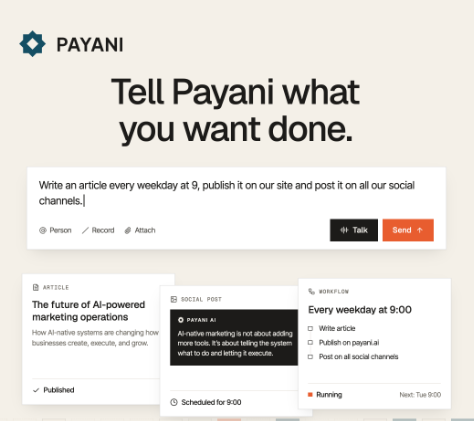
By: James Vance – SeaPRwire – Marketing teams still spend more time wrestling software than closing deals. Dashboards multiply. CRMs demand constant feeding. Email tools sit in separate tabs. Campaign data lives somewhere else entirely. People become the glue holding fractured systems together. That friction is the real cost of modern sales operations. Payani AI just launched a system that flips the model. Users speak or type what they want done. The platform handles the rest using the company’s own data.

The launch centers on a conversational execution layer called Ask Payani. It sits across CRM records, email threads, campaign metrics, and pipeline stages. A user can say: find everyone who replied to last week’s campaign, draft a personal follow-up for each, and book a call with those who asked about pricing. The system identifies the relevant contacts, pulls prior communications, prepares the messages, and coordinates next steps. No separate logins. No manual list building. No switching between apps. The same interface covers prospecting, content production, social publishing, advertising, reporting, and workflow automation. Ali Payani, founder and CEO, put it plainly. Software has always required people to do the connecting and the operating. Payani was built the other way around. The AI already understands the business. You tell it the outcome. It figures out the steps. The company also released Payani Switch to ease migration from HubSpot, Pipedrive, and Zoho. Early users moved more than 100,000 contacts in the first weeks. One team transferred a full HubSpot history of 46,000 contacts in a single afternoon. Every action still passes through existing permissions and validation rules. Users can review proposed messages or workflows before anything goes out. The system records the decisions for accountability. Human control stays in place while the repetitive coordination disappears. Payani AI grew out of Payani Group’s years running marketing and growth operations. The product was developed and funded internally. It is already running inside the group’s own campaigns. Ali Payani is scheduled to deliver a keynote at the 2026 TechEquity AI Summit on the shift from human-operated software to AI-directed operations. The conversational system became available on October 20, 2026. Businesses can examine the full platform at payani.ai.

The practical closed loop is clear. Data, expertise, and execution now live in one environment. A single natural-language instruction can trigger coordinated work across the stack without forcing people to become system administrators. Migration friction drops when contacts and history move in hours rather than months. Oversight remains through review gates and permission structures already familiar to most teams. The endgame is not another chatbot bolted onto existing tools. It is software that absorbs the operational load so marketers and sellers can focus on judgment and relationships. Companies still drowning in tab-switching should test whether a direct instruction can replace the daily dashboard shuffle. That is the only metric that will matter in the next cycle of sales technology.

Author bio: James Vance, long-time senior commentator for international technology weeklies covering enterprise software and AI product strategy.


source https://newsroom.seaprwire.com/press-releases/technologies/stop-clicking-dashboards-just-tell-the-ai-what-you-want-done/

10/19/2026

Hank Robotics Earns Chamber Nod for Drone Cleaning Across Roofs and Towers

By: TechVanguard – SeaPRwire – Hank Robotics just joined the 2026 U.S. Chamber of Commerce CO-100 list. The Miami firm is one of one hundred recognized American businesses. It sits among the ten Tech Innovators honorees. Founded in 2024, the company uses drones and robotics for commercial exterior work that once needed heavy gear and long setup times.

The service list is concrete. High-rise window cleaning. Commercial roof washing. Façade cleaning. Pressure washing. Soft washing. Solar panel cleaning. Water tower and elevated tank maintenance. Thermal drone inspections. The company pairs drone-assisted methods with conventional techniques. It targets surfaces that are hard to reach. Clients include hotels, office towers, warehouses, shopping centers, industrial sites and property managers. The goal is efficient exterior maintenance with less disruption.

Project numbers appear in the release. Approximately 570,000 square feet of warehouse roof and façade cleaning for H&M. 270,000 square feet of commercial roof cleaning for The Graham Companies. Exterior window work for citizenM Hotels. In Hobbs, New Mexico, about 400,000 square feet of thermal drone roof scanning and leak assessment for the city. Thermal imaging spotted abnormal temperature patterns and possible moisture intrusion. More than 100,000 square feet of cleaning for the DuPage Water Commission in Illinois covered water towers and related infrastructure.

International work is under way. The company is coordinating exterior building cleaning linked to the Central Bank of Barbados’ Tom Adams Financial Centre in Bridgetown. Additional capabilities include commercial building inspections, thermal roof assessments, aerial documentation and preventive maintenance for institutional and industrial properties. On the residential side it offers window cleaning, roof soft washing, house washing, driveway cleaning and paver pressure washing across South Florida. Training programs are also in development. They cover equipment operation, cleaning techniques, safety and the basics of running a commercial drone-cleaning business.

The Chamber recognition highlights the use of drone technology and robotics in maintenance. From Miami high-rises to municipal tanks and an overseas financial centre, the same toolkit is being applied. Scaffolding and extensive planning still exist. Propellers now handle part of the load.

Keep the thermal scan running before the next wash.

Author bio: TechVanguard, social-media tech voice with a large following on X, focused on practical gaps between AI promises and workplace reality.


source https://newsroom.seaprwire.com/press-releases/technologies/hank-robotics-earns-chamber-nod-for-drone-cleaning-across-roofs-and-towers/

10/18/2026

Companies Race Toward Autonomous Agents While Governance Lags Far Behind

By: TechVanguard – SeaPRwire – Sixty-one percent of leaders expect most AI agents to run largely on their own within four years. Only twenty-one percent say their organizations can redesign the processes that will surround them. The gap sits right there in the Deloitte numbers from August 2026. Five hundred one senior managers and executives in the United States answered the survey. The ambition is clear. The readiness is not.

Seventy-four percent expect nearly half of their business processes to be rebuilt around AI agents in the same four-year window. Just five percent call their current processes highly prepared for autonomous AI. Only fifteen percent have scaled coordinated agents across multiple functions. An AI agent can already push multi-step workflows toward a goal. It can talk to external software without waiting for human approval on every step. That shifts the employee’s role. Policies must therefore spell out access privileges, escalation points for human review, quality-control steps, and who owns the error when something breaks.

Okta’s May 2026 numbers sharpen the same problem. Ninety percent of security leaders feel confident they can see organizational AI use. Fifty-two percent of knowledge workers still run unapproved tools without IT or security sign-off. Fifty-eight percent of executives reported an AI-related security incident or close call in the prior twelve months. The visibility gap and the incident rate sit side by side. Explicit controls of the kind already applied to human employees become the next requirement.

Azahara Corrales, an AI governance strategist interviewed in August 2026 by Lorka AI, pointed to another missing piece. Front-line staff understand the procedural nuances. They are best placed to mark which tasks an agent can handle alone and which decisions must rise to a person. Before any expansion of agent duties, clear access levels, approval thresholds and review procedures have to be written down. Those guardrails decide whether people can still supervise the technology as their own roles change.

The survey data and the security findings point in one direction. Ambition for autonomy has moved ahead of the operational rules needed to contain it. Organizations that keep adding agent scope without those rules will keep meeting the same friction.

Write the access rules first.

Author bio: TechVanguard, social-media tech voice with a large following on X, focused on practical gaps between AI promises and workplace reality.


source https://newsroom.seaprwire.com/press-releases/technologies/companies-race-toward-autonomous-agents-while-governance-lags-far-behind/

10/17/2026

As-Built Plans Close the Loop: Estimators Who Skip Them Bid Blind Twice

By: James Vance – SeaPRwire – Field changes walk away unrecorded and the next bid pays for it. Estimating Edge just put out a guide that treats as-built plans as the fix. The company builds The EDGE estimating software and sits under Foundation Software. The new piece is titled “The Contractor’s Guide to As-Built Plans (and Why Estimators Need Them).” It shows what those final drawings actually capture and how estimators can turn them into sharper prices.

Official points stay tight. Construction almost never matches the blueprint exactly. When field changes stay off the record, contractors pay twice. Closeout and final payment stall first. The next bid then repeats the same misses. As-built plans are the final drawings that show the project exactly as it stands. Every change sits on them. That record gives a true account of what the job actually took. Each finished project then makes the following bid tighter. The guide walks through clear distinctions. As-built drawings differ from design drawings, shop drawings and redline drawings. Each type fits a different spot in the process. Four kinds of change land on every as-built set: dimensional shifts, utility routing, material substitutions and field obstacles.

Owners prefer the as-built set before they release final payment. Tying approved change orders to that same record keeps the estimate history accurate and usable later. Comparing the original estimate against the as-built data reveals where material quantities, labor hours and substitutions moved the final cost. Those comparisons stack up over multiple jobs. Estimators who review the data project after project start to see repeating gaps. One common gap is underestimated labor on a certain scope. Another is a material that gets substituted on almost every job. Once the pattern shows, the next bid can adjust before it goes out.

The EDGE software has served commercial construction takeoff and estimating for roofing, fireproofing, interior and exterior finishing trades for more than thirty years. Foundation Software adds job-cost accounting, expense and pay tools, project management, safety, HR, mobile field apps and payroll. The new guide simply points estimators back to the one record that already exists on every finished job. Use it or keep paying the same misses twice.

Author bio: James Vance, technical director and geek analyst with deep experience inside major Silicon Valley platforms, focused on industrial data systems and real-time production tools.


source https://newsroom.seaprwire.com/press-releases/technologies/as-built-plans-close-the-loop-estimators-who-skip-them-bid-blind-twice/

10/16/2026

No Cameras for the Firing Squad: Trump Overrides the Livestream Plan for Hasan

By: Gavin Thorne – SeaPRwire – The livestream is off. President Trump on October 15 canceled the online broadcast of the firing-squad execution of former Army Major Nidal Malik Hasan. The decision reversed Defense Secretary Hegseth. Opposition from Republicans, religious leaders and the public had already stacked high. Hasan still faces the squad on December 3 at Fort Hood. He will be the first U.S. military prisoner executed by firing squad since 1945. No cameras will roll for the wider audience.

Hasan killed thirteen people at the Fort Hood base in 2009. He was a major and a psychiatric medical officer. The Pentagon announced on October 8 that it would stream the execution to the public online. No platform was named. Trump said on October 10 he had not yet decided. An anonymous White House official told Reuters that Trump and his advisers had not known about the livestream plan beforehand. Families of the victims may still watch in person if they choose. That option remains under current practice.

Trump posted the change on Truth Social. He wrote that broadcasting the execution might deter by showing the world how America treats terrorists and scum like Hasan. He added that many kind and well-intentioned people do not want to watch the death by livestream or any other visual means. Some Republicans, including Vice President Vance, voiced opposition. Religious leaders joined them. Archbishop Timothy Broglio, who oversees Catholic pastoral care for the U.S. armed forces, objected. Pope Leo XIV condemned every form of the death penalty. Polls showed most Americans against the broadcast.

The move marks a rare public split between Trump and Hegseth, a close ally. The Pentagon insisted their positions stayed completely consistent. A department statement said Trump spoke with Hegseth before the Truth Social post. The controversy lands while the death-penalty system faces fresh doubt. Last month Tennessee tried to execute Christa Pike. Two lethal injections failed. She suffered severe injury and went to hospital. The Associated Press reported she left the hospital on October 10 and returned to prison. Pike was convicted of murder in the 1990s.

Internal voices and external pressure closed the camera option. The execution itself proceeds on schedule. The public will not watch it live.

Author bio: Gavin Thorne, political insider reporter based in Washington D.C., tracking executive decisions and military justice controversies for major outlets.


source https://newsroom.seaprwire.com/contributors/gavin-thorne/no-cameras-for-the-firing-squad-trump-overrides-the-livestream-plan-for-hasan/

Pick-Six in the Red River: Oklahoma Safety Claims the Week 6 Lott IMPACT Nod

By: Logan Pierce – SeaPRwire – The release calls it Player of the Week. Strip the polish and the core is simple. A senior safety from Corinth, Texas, turned one play into the weekly award. Peyton Bowen of Oklahoma intercepted a pass and ran it back forty-two yards for a touchdown. He added seven tackles, six of them solo. The Sooners beat number one Texas twenty-seven to twenty-four in the Red River rivalry. That interception was the third of his career.

The vote process sits plain in the announcement. Former players, coaches and Lott IMPACT Trophy board members cast an internal ballot. Fans add a social media vote. Bowen cleared both. Last season the league coaches put him on the All-SEC second team. The SEC Fall Academic Honor Roll listed him each of the past two seasons. Those lines match the award’s own checklist. IMPACT stands for Integrity, Maturity, Performance, Academics, Community and Tenacity. The academic honor rolls cover the A. The pick-six and the tackle count cover the P.

Three other names appeared on the same weekly shortlist. Xavier Gilliam, sophomore defensive tackle at Tennessee, recovered a fumble and recorded a sack among one point five tackles for loss. He finished with four total tackles in the Volunteers’ twenty-four to seventeen win at Arkansas. Tre Miller, senior cornerback at North Carolina, intercepted a pass, broke up two more and made four tackles, two solo, in the Tar Heels’ twenty-one to seventeen win at Pitt. Jalen Woods, senior linebacker at UCLA, recovered a fumble, led the Bruins with nine tackles, four solo, and two for loss in a seventeen to fifteen upset at Oregon. Each posted a clear defensive mark. None matched the combination of a touchdown return and a ranked-team victory that Bowen delivered.

Allied Universal presents the trophy. The company calls itself the world’s leading security and facility services provider. It serves more than four hundred of the Fortune five hundred. Operations run in over one hundred countries and territories. It ranks as the third-largest private employer in North America and seventh in the world. Annual revenue sits near twenty-three billion dollars. The firm supplies AI-enabled security technology, integrated systems, monitoring and response. The weekly award and the December ninth final announcement in Newport Beach, California, keep the brand visible through the season.

The final 2026 Lott IMPACT Trophy winner will be named on December ninth in Newport Beach. Until then the weekly selections keep the ledger current. Bowen’s numbers from the Red River game now sit at the top of that ledger for Week 6.

Author bio: Logan Pierce, independent business writer active on Medium and similar platforms, focusing on how sponsorships and weekly awards shape commercial visibility in college athletics.


source https://newsroom.seaprwire.com/press-releases/finance/pick-six-in-the-red-river-oklahoma-safety-claims-the-week-6-lott-impact-nod/

10/15/2026

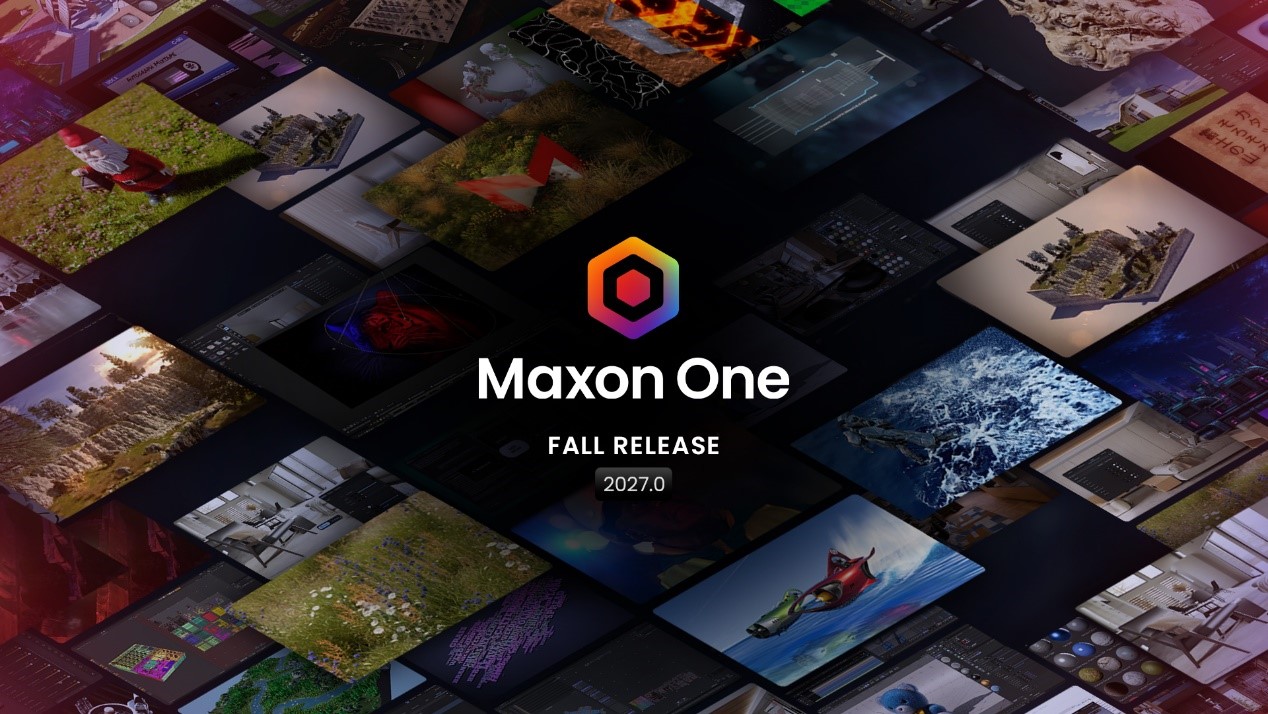
Scatter, Foam, and Less Waiting: Maxon’s 2027.0 Update Actually Moves the Needle for Working Artists

By: TechVanguard – SeaPRwire – Most software updates promise the moon and deliver a checkbox. Maxon’s Fall 2026 release, shipping the 2027.0 versions of Cinema 4D, ZBrush, Redshift, Red Giant and Autograph, feels different. It targets the exact friction points artists complain about in daily production. Bigger environments. Faster feedback. Fewer app switches. That is the real pitch.

Look at the official list first. Cinema 4D 2027.0 adds a full Scatter System. The new Scatter Generator and Scatter Tag handle distribution, filtering, clustering and transforms. They plug straight into MoGraph Fields and Effectors so artists can shape and animate the scatter without leaving the familiar toolset. Liquid FX joins the unified simulation system. Foam, spray and bubbles generate automatically from the liquid and respond to its motion. The release also tightens the Cinema 4D–Redshift link, improves ACES 2.0 alignment and adds everyday quality-of-life fixes. ZBrush gets a native UV Editor built on Cinema 4D technology. It supports UDIMs and texel density so artists can create and refine UVs without exporting. Selection Sets let users save and recall Polygroups, masks, Polypaint, morph targets and UV layouts. On iPad, Spotlight arrives for reference and projection work. Non-destructive 3D Layers let artists experiment with sculpting, polypaint and masking without locking changes. Redshift reworks its memory architecture for better efficiency across hardware. Interactivity jumps so changes to lights, materials or scene elements show up faster. Artists can drag Cinema 4D objects, Cloners and particle systems straight into material workflows and the Node Editor. A new procedural system generates fur, fibers, textiles and knitted materials at render time. NVIDIA RTX Spark support expands the hardware range. Red Giant adds Scene Light, an AI-powered depth-aware relighting tool inside After Effects. Artists place interactive lights for muzzle flashes, explosions or day-for-night shifts and keep them art-directable. Maxon Noise comes to Universe. Real Lens Flares gains Custom Schmutz for personal grime textures and more Light Source Types. Chromatic Displacement lands in Autograph. Maxon Studio Capsules get richer Custom UI controls. Autograph itself gains an MCP Server that links AI agents to its native tools. Artists can now copy and paste 3D elements, including animation, cameras, lights, nulls and primitives, directly from Cinema 4D into Autograph. Everything ships on 14 October 2026.

Now the practical reading. Artists have asked for proper scattering inside Cinema 4D for years. The new system answers that request with MoGraph integration instead of forcing a separate plugin or heavy workaround. Liquid FX removes the need to build secondary foam and spray sims from scratch. In ZBrush the UV Editor and Selection Sets cut the constant back-and-forth that slows iterative sculpting. iPad gains layers and Spotlight so the tablet stops feeling like a sketch pad and starts feeling like a production station. Redshift’s memory and interactivity work hit the moment artists care about most: the gap between a change and the next preview. Dragging Cloners and particles into materials removes busywork. Procedural fur and textiles at render time keep the scene lighter. Red Giant’s Scene Light gives compositors real control over interactive lighting without heavy masks. Maxon Noise and Custom Schmutz put familiar procedural and grime tools where motion designers already work. The Autograph MCP Server and the direct Cinema 4D paste link start closing the gap between 3D and compositing. CEO David McGavran framed it as listening to artists and stacking capabilities so the possible keeps expanding. A few years ago liquid simulation in Cinema 4D could not pour a beer with foam and spray. Now it can. That is the concrete progress the release claims.

The pattern across the suite is clear. Maxon is reducing the number of times an artist has to leave the current app or rebuild something by hand. Scatter and Liquid FX stay inside Cinema 4D. UV work and selection management stay inside ZBrush. Faster Redshift feedback stays inside the render loop. Scene Light and Maxon Noise stay inside the compositing timeline. MCP and the Cinema 4D paste stay inside Autograph. The result is fewer barriers between idea and final frame. Artists who live in these tools every day will feel the difference first on dense environments, fluid shots, complex sculpts and interactive lighting passes. The ones who still juggle five apps for the same tasks will notice the friction more sharply.

This is how production pipelines tighten. Not with one flashy feature, but with a set of targeted removals of daily drag. The 2027.0 tools are available now. The practical test is simple: open a current project that still needs external scatter, secondary fluid sims or repeated UV rebuilds and see how many of those steps disappear.

Author bio: TechVanguard, a veteran technical director and tool analyst who has spent years inside large-scale VFX and animation pipelines across major studios.


source https://newsroom.seaprwire.com/press-releases/technologies/scatter-foam-and-less-waiting-maxons-2027-0-update-actually-moves-the-needle-for-working-artists/

10/14/2026

Supertab on Fastly: Classify the Bot, Publish the RSL Terms, Charge or Block at the Edge

By: Alex Mercer – SeaPRwire – Publishers on Fastly just got a third option. They can identify the AI crawler, publish machine-readable licensing terms, and decide per company whether to allow, block or charge. No CDN swap. No new origin infrastructure. Bots already exceed 49 percent of traffic. Most of that traffic pays nothing. That is the pressure point.

Official release facts are clean. Supertab announced on 12 October 2026 from New York that Supertab Connect is live on Fastly Compute. Publishers can classify AI bot traffic, publish RSL licensing terms, and allow, block or charge individual crawlers at the edge. Fastly already serves a large share of media companies, publishers and content platforms. Activation runs through Fastly Compute. The same product stays compatible with other major CDNs, the WordPress plugin and the SDK. Fastly’s Threat Insights 2026 report states bots now make up more than 49 percent of all traffic. Most of that volume generates no revenue for the publishers whose work is consumed. The traffic still costs infrastructure load, bandwidth and server capacity. Taking no action means giving the work away for free with no visibility into use. Simon Wistow, Fastly co-founder and VP of Strategic Initiatives, said Fastly has always focused on speed and protection and is now extending that to the economics of content access. Publishers should not have to choose between being crawlable and being compensated. The company has worked with publishers, standards bodies, partners, legislators and AI companies so sites can stay discoverable without going out of business. Cosmin Ene, Supertab founder and CEO, noted that the next audience is not entirely human. Bots, agents and AI systems already access content at scale. Supertab gives Fastly publishers a straightforward way to attach terms to that access. Classification identifies crawlers by the company behind them—OpenAI, Anthropic, Perplexity, Google—and by activity type, from training-data collection to agents fetching pages on a user’s behalf. Licensing terms use RSL 1.0, an open standard that lets publishers post machine-readable AI terms on their own domain. Supertab Connect publishes those terms and checks every crawler request against them at the edge. Access is enforced by the Crawler Authentication Protocol. CAP validates the crawler’s license token before the request reaches origin. Licensed requests are allowed and recorded. Unlicensed requests are blocked and pointed to the publisher’s terms. Human visitors pass straight through. Deployment requires no DNS changes. Typical time is two to three hours.

Industry subtext sits next to those numbers. Until now the practical choices were binary: block every AI crawler or let every one through. Blocking also cuts legitimate, revenue-generating traffic. Letting everything through leaves no terms, no data and no revenue. The Fastly integration places the decision at the edge, before origin, with real network reach. Every licensed request becomes an auditable record of exactly what each AI system consumed. Publishers set the terms. Fastly and Supertab apply them. The result turns previously invisible, uncompensated traffic into metered and potentially paid traffic. Supertab describes itself as infrastructure for consumption-based commerce. Connect classifies automated traffic by operator and activity. The licensing layer publishes RSL 1.0 terms on the site owner’s domain. The same layer meters, prices and settles usage across humans, agents and enterprises so that what machines consume can be measured and paid for as it happens.

The practical close is immediate. Any publisher already on Fastly can enable the SDK, publish RSL terms and start deciding per crawler today. Free trial and integration guide are live at supertab.co. Operators still running the old binary of block-all or allow-all can stop leaving the majority of traffic unpriced. That is the next move.

Author bio: Alex Mercer, a Silicon Valley tech director and edge-systems analyst who has spent years inside CDN policy, bot classification and content-licensing infrastructure.


source https://newsroom.seaprwire.com/press-releases/technologies/supertab-on-fastly-classify-the-bot-publish-the-rsl-terms-charge-or-block-at-the-edge/

10/13/2026

Tidal Wave’s Twin Openings: Free Washes, $10 Club Entry, and Two Local Givebacks

By: Logan Pierce – SeaPRwire – Two new Tidal Wave sites open in the same week. One in Claremore, Oklahoma. One in El Paso, Texas. Free premium washes run for twelve days. A $10 Founders Club deal locks new members into thirteen months of savings. Local schools and disability programs get the cash. That is the play.

Official announcement facts are precise. The release is dated 9 October 2026 from Thomaston, Georgia. Tidal Wave Auto Spa opens locations this week in Claremore, Oklahoma and El Paso, Texas. The Claremore site is the company’s sixth in Oklahoma. The El Paso site is its twenty-third in Texas. The full network now stands at 335 locations across thirty states. Both sites offer twelve days of free premium washes from 7 October to 18 October. The free option is Graph-X4® + Super Shammy. Standard features include mat cleaning stations, complimentary tire air, spot-free rinse, undercarriage wash, foam and wax treatments, and tire shine. The Founders Club offer is extended through the same dates. New members on the top three wash plans pay $10 for the first month, then receive $10 off each of the next twelve months. That equals thirteen months of savings. Membership grants access to the entire 335-location network. CEO and founder Scott Blackstock stated that opening both markets in one week reflects current growth into new areas and deeper presence in existing ones. He described Claremore as a community with strong identity and loyal roots. He called the second El Paso location a direct response to local embrace. Tidal Wave has donated more than $8 million to charitable organizations nationwide. Claremore Giveback Day is set for 14 October from 9 a.m. to 6 p.m. The company will donate $1 for every free wash and $5 for every new Clean Club membership to Roosa Elementary School. Funds support academic excellence and STEM education. The school is one of the few in Oklahoma consistently recognized as a Great Expectations Model School. El Paso Giveback Day is 15 October, same hours. The same donation formula goes to The ARC El Paso. Funds support inclusion of people with intellectual and developmental disabilities. Claremore address is 1701 Scissortail Ave, Claremore, OK 74017. El Paso address is 1458 Lee Trevino Drive, El Paso, TX 79936. A nearby existing El Paso site is at 2080 N Zaragoza Rd. Additional openings are planned this year in Albuquerque, New Mexico and Merritt Island, Florida. Single washes start at $15. Unlimited memberships, family plans and fleet plans are available. The company was founded in 1999 in Thomaston, Georgia by Scott and Hope Blackstock. It began as a small-town self-service wash, became the first conveyor car wash in Georgia, and is now the fifth-largest conveyor car wash company in the nation.

Commercial intent is straightforward. Free premium trials pull traffic. The $10 Founders Club entry converts that traffic into multi-month recurring revenue while giving members network-wide access. Local Giveback Days turn the same traffic into community goodwill and measurable donations. The dual-market timing tests both new-market entry and densification in a proven city. The $8 million cumulative charity figure is the long-term proof of the same model. Brands that open without a trial-plus-membership-plus-local-donation stack leave volume on the table. Tidal Wave put the full stack on the calendar for both sites this week. Operators watching the sector can copy the same twelve-day free window and thirteen-month club math.

Author bio: Logan Pierce, a veteran operator with decades of front-line experience scaling multi-unit service businesses across retail and franchise formats.


source https://newsroom.seaprwire.com/press-releases/finance/tidal-waves-twin-openings-free-washes-10-club-entry-and-two-local-givebacks/

10/12/2026

Seoul’s First HGV Shot: Peninsula Hypersonic Race Moves from Claim to Parallel Tests

By: Marcus Sterling – SeaPRwire – South Korea fired its first indigenous hypersonic glide vehicle on 8 October. The president watched. North Korea had already run intermediate-range and new-weapon tests in the same window. Both sides now call the systems game-changers. The security dilemma is no longer theoretical. It is sequential and public.

Official statements fix the dates and the language. The Blue House announced on 8 October that South Korea’s domestically developed hypersonic glide vehicle completed its first successful test that day. President Lee Jae-myung observed the launch. The stated aims were to verify performance of ultra-high-temperature heat-resistant materials under hypersonic conditions, guidance and control capability, and low-altitude irregular flight. The vehicle reached its planned altitude, separated successfully, and completed the programmed flight under hypersonic conditions. North Korea conducted an intermediate-range strategic missile training launch in the early hours of 3 October. Official reporting said the special flight modes of various missiles were verified in practice. On 20 September the Missile General Bureau carried out a new-weapon test. Outside analysis of released imagery assessed the recent North Korean launches as hypersonic systems. South Korea is also advancing the Hycore project, an air-breathing hypersonic cruise missile. Images of a Hycore test launch from a ground vertical platform and stage separation were shown in September 2025. A further program seeks an air-launched hypersonic variant based on the KTSSM tactical ballistic missile for the KF-21 fighter. North Korea has conducted at least five hypersonic missile tests since its first Hwasong-8 flight in 2021. Subsequent tests in 2022, 2024 and later refined different glide-body approaches and solid-fuel stages. Both capitals frame the weapons as core strategic assets. North Korean statements speak of giving the enemy an incurable headache. South Korean commentary after the 8 October test called the hypersonic glide vehicle a system that can change the battlefield equation. South Korea also displayed the Hyunmoo-5 alongside the new test, signaling parallel pursuit of quality penetration and quantity pressure.

The cost of the parallel track is already visible. Each side presents its own program as a defensive answer to the other’s progress and to existing missile defenses. The practical result is a denser test calendar, shorter warning windows, and narrower room for crisis management. The next practical step is not another technical claim. It is whether either capital will pair the new systems with transparent confidence-building measures that keep the dilemma from hardening further.

Author bio: Marcus Sterling, a senior researcher at an independent European strategic think tank focused on East Asian security dynamics, missile proliferation and crisis stability on the Korean Peninsula.


source https://newsroom.seaprwire.com/contributors/marcus-sterling/seouls-first-hgv-shot-peninsula-hypersonic-race-moves-from-claim-to-parallel-tests/

ZHILAI MED’s RFID Loop: 97 Percent Traceability, One Staffer for a 3000-Staff Hospital

By: Alex Mercer – SeaPRwire – A closed-loop RFID system for hospital workwear and linen just claimed 97 percent traceability. One delivery worker now covers morning restock and afternoon collection at a 3000-staff site. Staffing for that task dropped 80 percent. That is the number that matters. Manual counts and single-barcode scans cannot match it.

Official release facts list the full stack. ZHILAI MED announced an RFID-powered smart textile management solution on 10 October 2026 from Shenzhen. It targets healthcare facilities and industrial laundries. The goal is better traceability, efficiency and digital control of workwear, uniforms, linens and other reusable textiles. The system combines RFID identification, automated workwear dispensers, return units, laundry inventory tools and cloud software. Together they form a closed loop. Every textile item receives a unique RFID identity. It is tracked from registration through distribution, use, return, washing, inventory and reissue. RFID reads multiple items at once. Manual records or barcodes require one-by-one scanning. The difference gives clearer visibility into circulation and stock levels. The Automatic Workwear Dispenser holds up to 500 uniforms. Authorized staff get 24-hour self-service access. Authentication works by facial recognition, staff cards, QR codes or passwords. Low-inventory alerts flag when stock runs short. The Return Unit pairs RFID with infrared detection. It identifies returned garments in under three seconds. The unit occupies roughly 0.6 square meters. Compact size suits tight healthcare spaces. It also detects metal objects inside returned workwear. If metal is present the compartment stays locked. That step cuts hospital asset loss and shields laundry staff from hazardous items. The cloud platform shows real-time inventory and movement data. It links to existing hospital staff-card or HR systems. It logs status and history for each textile piece. It produces department-level washing and cost reports. In project deployments the solution reached a 97 percent textile traceability rate. One hospital with about 3000 staff needed only a single delivery employee for morning restocking and afternoon collection. Related staffing requirements fell by 80 percent. The system is already live in more than 200 healthcare institutions. Hong Kong sites include Queen Mary Hospital, Pamela Youde Nethersole Eastern Hospital and Kowloon Hospital.

Industry subtext sits next to those figures. Laundry and workwear still run on paper lists or slow barcode lines in many hospitals. RFID bulk reads and automated dispensers remove that friction. The metal-detection lock on the return unit addresses a concrete hospital risk. Asset loss and needle-stick hazards for laundry crews are real costs. The cloud layer turns every wash cycle into department cost data. That report is what finance teams actually use. ZHILAI MED is a subsidiary of ZHILAI Technology. Manufacturing sits in two bases, one in Xianning, China, and one in Binh Duong, Vietnam. Annual capacity exceeds 200,000 units. Production is fully automated and lean. The parent offers OEM and ODM services worldwide. The company will show the dispenser, return unit and full management suite at EXPOdetergo International 2026 in Milan. Dates are 23 to 26 October. Location is Hall 03, Booth G26.

Supply-chain reality for this class of hardware is straightforward. High unit volume and dual-country production keep the cost base low enough for hospital budgets. Deployments already past 200 sites prove the loop works outside the pilot stage. Hospitals that still count textiles by hand can start with the same dispenser-plus-return pair that cut staffing 80 percent at the 3000-staff site. That is the practical next step.

Author bio: Alex Mercer, a Silicon Valley tech director and systems analyst who has spent years inside RFID deployments, automated logistics hardware and hospital operational tech.


source https://newsroom.seaprwire.com/press-releases/technologies/zhilai-meds-rfid-loop-97-percent-traceability-one-staffer-for-a-3000-staff-hospital/

10/11/2026

A 28-Year-Old Died in a Plague Lab. WHO Still Won’t Say Why.

By: Alistair Kroon – SeaPRwire – The World Health Organization just did something unusual. It publicly contradicted a member state’s conclusion without calling it wrong.

On October 10, WHO issued a formal statement about a death at a Russian biodefense facility. The message was careful. The cause of death remains undetermined. That is a polite way of saying Moscow’s “nothing to see here” has not closed the file.

Here is what we know. A 28-year-old lab worker named Darya Shipilova fell ill on September 29 with severe pneumonia. She was hospitalized. She died on October 2. She worked at the Irkutsk Research Institute for Plague Control in Siberia. The facility studies Yersinia pestis. That is the bacterium behind plague. Pneumonic plague is the lung form. It spreads person to person through respiratory droplets. Untreated, it kills fast. Treated early with antibiotics, it usually does not.

Russia says it ran more than 5,500 lab tests. No dangerous pathogens turned up. Roughly 200 contacts were placed under quarantine as a precaution. None developed symptoms. No new severe pneumonia cases linked to the event. The institute says she was vaccinated per job requirements. Two independent investigations found no evidence of a lab biosafety breach.

Now read the WHO statement again. Existing information does not suggest an outbreak is spreading. But because the deceased has no confirmed etiological diagnosis, exposure linked to laboratory work cannot be fully ruled out. That is bureaucratic language carrying a real warning. Russia tested the contacts and the environment. It did not, apparently, get a clear pathogen diagnosis from the patient herself.

That gap matters. In infectious disease investigations, the index case is the anchor. If you cannot say what killed her, you cannot say what did not.

Consider the second-case story. British and Serbian tabloids reported a possible additional infection. Russia denied it. WHO’s October 10 statement notes no evidence of sustained transmission based on Russian information. The keyword is “based on Russian information.”

So what is really happening here? Three things.

First, this is a biosafety story, not an outbreak story. The Irkutsk facility handles dangerous pathogens. A young worker dies of severe pneumonia. The natural question is whether workplace exposure occurred. Russia says no. WHO says the evidence is insufficient to be certain. Those two positions can coexist. They often do in biodefense incidents.

Second, this is a transparency test. Russia ran thousands of tests and shared results. That is more than many states would do. But the absence of a pathogen diagnosis on the patient is a hole at the center of the investigation. WHO is asking for clinical, epidemiological, and laboratory information to improve risk assessment reliability. That is a formal request for more data. It is not a routine courtesy.

Third, this is a reminder about monitoring. WHO used the statement to tell countries to strengthen surveillance for unexplained severe respiratory infections. It also told labs handling dangerous pathogens to follow biosafety and infection control rules. That advice is not aimed at Russia alone. It is aimed at every country with a BSL-3 or BSL-4 facility near a population center.

Pneumonic plague is a scary phrase. It should be. But the real risk here is not a Siberian outbreak. The real risk is an unresolved death at a high-containment lab. Unresolved means the cause is unknown. Unknown means you cannot audit the safety system that failed or did not fail.

Russia’s response has been thorough on volume. 5,500 tests is a lot. Quarantining 200 contacts is aggressive. Two independent investigations is more than minimal. But volume is not the same as closure. A negative test on a contact tells you that contact is fine. It does not tell you what killed the index patient.

WHO’s position is not an accusation. It is a standard. The standard says: show us the clinical picture, the epidemiology, the lab data. Then we can assess risk properly. Until then, the file stays open.

For anyone watching biosecurity, the lesson is simple. High-containment labs are only as safe as their weakest reporting link. A death with no confirmed cause is that weak link. It does not prove a breach. It proves the investigation is incomplete.

Moscow can close this by producing the missing clinical and laboratory data. Until it does, WHO will keep the question alive. And so should everyone else.

Author bio: Alistair Kroon is a geopolitical commentator whose work on biosecurity and state transparency has appeared in major European dailies.


source https://newsroom.seaprwire.com/contributors/alistair-kroon/a-28-year-old-died-in-a-plague-lab-who-still-wont-say-why/

Epomaker HE60 at Sixty Bucks: Magnetic Speed, Built-In Thock, No Extra Desk Real Estate

By: Alex Mercer – SeaPRwire – Sixty percent layout. Hall Effect magnets. Factory thock. Fifty-nine ninety-nine. Epomaker just dropped a board that packs competitive tools into a footprint most FPS players already clear for mouse swings. The price sits low for what the spec sheet lists. That gap is the real signal.

Official release facts start clean. The HE60 is a 60 percent Hall Effect gaming keyboard. It pairs ultra-precise control with immersive sound and flexible wireless links. Compact design frees desk space and opens more room for mouse movement. FPS players who need wide, fast mouse arcs get the direct benefit. Two-stage feet appear on the board. Those feet are rare on magnetic keyboards. Users can set the typing angle to match posture. Long sessions stay more comfortable. Factory-lubed Creamy Jade Hall Effect magnetic switches sit inside. The feel is responsive with a slightly firm press, strong rebound, and clear feedback. Rapid Trigger adjusts down to 0.005 mm precision. Players tune key response to their own habits. Faster reactions and steadier control follow in high-intensity play. DKS and SOCD expand the customization set. Key behaviors can be optimized for competitive cases. Wired and 2.4 GHz modes both push high-speed input. Every movement and command registers quickly.

Industry subtext sits right next to those numbers. A sixty-dollar magnetic board that ships with Rapid Trigger at that resolution and dual 8000 Hz paths is not the usual entry price. Most magnetic boards still ask more for the same feature set. The five-layer dampening stack, tray-mount structure, aluminum positioning plate, and tuned internal filling are listed as the source of the fuller, concentrated thocky profile. No extra mods required. That claim lands because the switches and the acoustic stack are named together. Connectivity covers Bluetooth, 2.4 GHz, and USB. Wired and 2.4 GHz both hit 8000 Hz polling. An 8000 mAh battery handles the higher draw common to magnetic boards and still claims extended wireless time. Black and white colorways ship now. The gaming-inspired ribbon design adds visual character and makes the board easier to carry. Availability is live on the Epomaker official site, Amazon, and AliExpress. Official-site price is locked at 59.99 dollars. The company describes itself as Epoch of Makers. Its stated focus is distinctive sound, thoughtful customization, and performance. The team mixes gamers, software engineers, product designers, and mechanical keyboard enthusiasts.

Supply chain reality for this class of board is simple. Magnetic switches, aluminum plates, multi-layer dampening, and high-poll rate wireless all carry cost. Shipping a finished unit at under sixty dollars means the margin lives in volume and in skipping the usual aftermarket sound kit. The HE60 puts the full list on the table at that price. Buyers who need compact desk space, adjustable Rapid Trigger, and ready thock can stop at the official page and order. That is the practical close.

Author bio: Alex Mercer, a Silicon Valley tech director and hardware analyst who has spent years inside keyboard firmware, magnetic switch validation, and competitive peripheral design.


source https://newsroom.seaprwire.com/press-releases/technologies/epomaker-he60-at-sixty-bucks-magnetic-speed-built-in-thock-no-extra-desk-real-estate/

10/10/2026

Five Liters, Not Five Hundred Bottles

By: Christian Brooks – SeaPRwire – Premium water in the United States still arrives mostly in single-serve plastic. A Finnish brand is betting that larger bag-in-box formats and a low-mineral profile can change the daily habit. The product is already on OneLavi.com. Amazon availability is next. That listing will decide whether the format travels beyond early adopters.

On 9 October 2026 NWB Finland Oy announced from Boca Raton that AINA Natural Water is coming soon to Amazon. The move continues the company’s planned U.S. rollout. AINA first became available to American consumers through OneLavi.com. Marita Weiman, Quality Assurance Manager at NWB Finland Oy, called the Amazon expansion an important next step. The goal is to make discovery and purchase easy while introducing what makes Northern Finnish water and the packaging approach different. The water originates in the Pudasjärvi region of Northern Finland. Groundwater is naturally filtered through layers of soil, sand and rock, then mechanically filtered and packaged. It contains approximately 32 mg/L of Total Dissolved Solids. The low mineral content produces a soft, neutral taste and a clean finish with no aftertaste. Instead of individual plastic bottles the brand offers 5-liter and 10-liter bag-in-box formats intended for home, work and other everyday settings. The packaging uses substantially less plastic than comparable volumes sold in traditional single bottles. NWB Finland Oy presents three differentiators for the U.S. market: the Northern Finland source, the naturally low mineral profile, and the sustainability-focused packaging. The company recently participated in the 2026 ECRM Vitamin, Weight Management & Sports Nutrition Session in Palm Beach Gardens, Florida, where AINA and its bag-in-box format were shown to U.S. retail buyers. Weiman said the U.S. presence is being built step by step and that Amazon will significantly broaden the opportunity for consumers across the country. The brand lists its points of difference as the Northern Finland source, natural filtration, measured purity at roughly 32 mg/L TDS, a clean taste profile, naturally low sodium, and packaging that reduces plastic relative to bottled formats. Further Amazon details will be released when the product becomes available for purchase. NWB Finland Oy is a Finland-based company focused on sustainable beverage packaging and natural water solutions, headquartered in Pudasjärvi. Its flagship brand is AINA Natural Water. The long-term vision is to make Northern Finland’s groundwater available to consumers globally while continuing to invest in sustainable packaging.

The commercial filter is simple. Watch the moment the Amazon listing goes live. Watch the early review volume and the share of 5-liter versus 10-liter units that sell. Those two signals will show whether the bag-in-box format converts curiosity into repeat household use.

Author bio: Christian Brooks, financial and business commentator focused on beverage packaging innovation and direct-to-consumer grocery expansion.


source https://newsroom.seaprwire.com/press-releases/finance/five-liters-not-five-hundred-bottles/

10/09/2026

Seventy Thousand Dollars for a Year of Practice

By: Jonathan Vance – SeaPRwire – The practical bridge from an F-1 visa to legal work is being priced out of reach. A new DHS proposal would charge schools seventy thousand dollars for a student’s first OPT application and thirty thousand for each extension. Schools may pass the cost to the student. The current fee is roughly five hundred dollars paid by the student. The comment period is open. That is the immediate regulatory fact.

On 7 October the Department of Homeland Security released a proposed rule reported by the Associated Press on the 8th. Schools would pay seventy thousand dollars when an international student first applies for Optional Practical Training. Each extension would cost the school an additional thirty thousand dollars. The Federal Register text states that schools may transfer the financial obligation to the F-1 student. The fee schedule will not take effect immediately. Public comments are being accepted from the 8th of this month through 9 November. OPT allows F-1 undergraduates and graduate students, after completing defined academic stages and with a school recommendation and USCIS approval, to obtain a period of lawful work related to their studies. The standard period is twelve months. Eligible STEM students may receive an additional twenty-four months. Domestically the programme has long been criticised. Critics note that OPT holders often receive lower pay than regular employees and that employers avoid social and medical insurance costs, leading some to view the programme as a channel for cheaper foreign labour. DHS states the new fees are intended to curb widespread fraud and speculation and to push schools toward stricter oversight and screening when recommending OPT. A department spokesperson described OPT as having become a conduit for cheap foreign labour that creates unfair competition for domestic workers. Online reaction included remarks that anyone who could pay seventy thousand dollars would not need to seek work in the United States and that the policy turns “working while in debt” into reality. The Hindustan Times warned that Indian students would be hit hardest. Approximately three hundred and fifty thousand Indian students study in the United States and form the largest group of OPT applicants. A Times of India survey last year found that OPT was a decisive factor for fifty-four percent of Indian students considering study in the United States. The Korea Economic Daily called the proposal a shocking blow; some Korean students interviewed said it amounted to driving them home. United States media framed the move as part of the current administration’s broader immigration-control agenda. Earlier measures included cancellation of legal status for thousands of students and detentions and deportations. International students remain an important revenue source for universities and related industries, and the treatment of the group has drawn widespread dissatisfaction. NAFSA, the Association of International Educators, stated that shutting out talented international students with different perspectives and ambition would harm innovation, economic and workforce growth, and American global leadership. Houston immigration attorney Steven Brown argued that the administration has used various means to obstruct legal employment-based immigration and that the present rule elevates that campaign to a new level, effectively abolishing OPT. Legal experts noted that even if issued the rule may prove difficult to implement; a presidential proclamation last year that raised the H-1B fee to one hundred thousand dollars was blocked by a federal court.

The practical next markers are procedural. Track the volume and source of comments filed before 9 November. Track whether any early legal challenges are filed once a final rule appears. Those two signals will show whether the fee structure advances or stalls.

Author bio: Jonathan Vance, public-policy specialist advising governments and sovereign funds on compliance assessment of immigration and education regulations.


source https://newsroom.seaprwire.com/press-releases/policy-analysis/seventy-thousand-dollars-for-a-year-of-practice/

The 25-Minute Gap Just Got a Platform

By: TechVanguard – SeaPRwire – Attackers now move from first foothold to data theft in as little as twenty-five minutes. That figure comes from Palo Alto Networks Unit 42. Large enterprises can throw people and tools at the problem. Most small and medium businesses cannot. Their MSPs are left stitching together separate products that rarely share context. The imbalance is already visible. CyberSentriq is putting an AI engine into those MSP hands and calling it the fix.

On 8 October 2026 in Galway, Ireland, CyberSentriq launched SentriqAI. The company describes itself as an AI-native cybersecurity and resilience platform backed by Bregal Milestone. SentriqAI is its new cybersecurity and data-resilience platform aimed at giving SMBs enterprise-grade protection through the managed service providers that already look after them. The release is the first major product milestone under CEO Myles Bray, who joined earlier this year to accelerate investment in AI-driven threat detection and cyber resilience. The platform is built so MSPs can deliver the capability without forcing SMB customers to hire large security teams or manage a fragmented set of tools. Bray stated that AI has changed the economics of cybercrime, enabling more convincing and targeted attacks at greater speed and scale. Large enterprises possess the teams, technology and budgets to respond. Most SMBs do not. SentriqAI sits inside Unified Email Security as an adaptive AI engine. It examines signals such as sender, domain, authentication, links, intent and history rather than simply returning an unexplained risk score. It surfaces the reasoning behind each conclusion so MSP technicians can see why a threat was flagged and can use that evidence in investigations and customer conversations. The platform draws a clear line between autonomous actions and AI-assisted ones. Phishing quarantine and backup restore run autonomously. Threat investigation and policy recommendations remain AI-assisted. The design assumes an AI workforce that reads signals continuously, prioritises what matters and converts insight into action faster than a human-paced team. CyberSentriq’s stated strategy is to replace the historical stack of point tools with a single MSP-first Microsoft 365 security platform for SMBs that combines cybersecurity, automation and data protection. Joe Burns, CEO and Co-Founder of UK MSP Reformed IT, which has moved to CyberSentriq, noted that most providers look the same and that differentiation is scarce. He cited the additional Entra backups and the ability to improve business-continuity planning because services can run in the cloud as reasons for the switch. The platform is delivered exclusively through MSPs, the channel that manages the majority of SMB technology environments. Bray closed by saying there should not be one standard of AI cybersecurity for large enterprises and another for everyone else. SMBs face sophisticated threats, hold valuable data and depend on their technology. CyberSentriq’s job is to give MSPs the intelligence, automation and resilience needed to close that gap. The company partners with more than 3,200 MSPs and protects more than 150,000 SMBs globally.

The commercial test is adoption speed and measurable outcome. Watch how many MSPs activate the autonomous quarantine and restore features in the first quarter after launch. Watch whether the average time from alert to containment among those MSPs drops below the twenty-five-minute benchmark cited by Unit 42. Those two numbers will show whether the platform closes the gap or simply adds another console.

Author bio: TechVanguard, senior commentator for an international technology weekly covering AI-driven cybersecurity platforms and the MSP channel.


source https://newsroom.seaprwire.com/press-releases/technologies/the-25-minute-gap-just-got-a-platform/

10/08/2026

Trust Now Matters as Much as the Camera

By: Alex Mercer – SeaPRwire – Security systems are adding sensors, cloud links and AI models faster than many organisations can verify them. Detection improves. False alarms fall. Central dashboards multiply. At the same time the attack surface of the security stack itself expands. Trust in the data and the platform has become equal to the physical coverage. That tension sits at the centre of the latest industry outlook.

On 5 October 2026 Securitas Technology, one of the world’s largest electronic security companies, released its 2027 Global Technology Outlook Report from Uniontown, Ohio. The report is the ninth annual edition. It draws on perspectives from more than 16,000 end-user clients across 19 countries, independent research with more than 575 security decision-makers, 26 leading manufacturers and innovators, and Securitas Technology subject-matter experts worldwide. The company presents it as the industry’s most comprehensive view of how security programmes are evolving to handle growing complexity, emerging risks and rapidly changing technology. Security is increasingly treated as support for business resilience, operational continuity and organisational confidence. The report describes a clear shift toward connected, intelligence-led strategies that let organisations anticipate risks, decide faster and operate more efficiently. Global President and CEO Tony Byerly stated that security leaders are navigating an environment defined by accelerating change. The outlook, he said, was created to help organisations understand what is changing, why it matters and how to move forward with confidence. The goal is practical insight that supports informed decisions and more resilient organisations. Four trends are highlighted. AI is moving beyond experimentation into everyday security operations. Organisations use it to improve detection accuracy, reduce false alarms, streamline investigations and make security information more accessible, while keeping governance and human oversight in place. Cloud platforms and remote services are becoming foundational. Organisations seek centralised visibility, improved system resilience and the ability to manage environments across multiple locations proactively. Drones and robots are shifting from emerging concepts to practical applications. Interest is growing around drone detection, automated patrols and enhanced situational awareness in complex or high-risk settings. Ecosystem resilience is treated as essential. As systems become more connected and data-driven, organisations place greater emphasis on cybersecurity, data integrity and long-term system resilience. Trust in the security systems is now regarded as equal to functionality. Beyond the technology trends, the report finds that organisations are prioritising reliability, proactive risk management, operational resilience and business continuity when they decide on security investments. Security is no longer viewed solely as a protective function but as a strategic capability that supports broader business objectives. Byerly noted that the pace of innovation continues to accelerate and that organisations which understand the intersection of technology, operations and trust will be best positioned to adapt. The report is available now and is intended to provide practical guidance for aligning technology investments with long-term security and business goals.

The practical filter is verification before expansion. Before adding another AI layer or another cloud console, require the audit trail of how detection decisions are made and the current cyber posture of the platform that will hold the data. Those two documents decide whether the new capability increases resilience or simply enlarges the surface that must be defended.

Author bio: Alex Mercer, senior commentator for an international technology weekly covering physical-security platforms and the convergence of AI with operational resilience.


source https://newsroom.seaprwire.com/press-releases/technologies/trust-now-matters-as-much-as-the-camera/

10/07/2026

The First U.S. Data Deal Is Only the Opening Move

By: TechVanguard – SeaPRwire – Keyword alerts still miss most brand appearances inside video. A logo flashes for three seconds. A creator mentions a product while the camera is pointed elsewhere. Traditional tools never see it. Multimodal systems that read visual, audio and context together are rare and expensive to prove outside a home market. Buzz & Beyond just signed its first U.S. commercial data agreement. The real test starts after the free pilots expire.

On 5 October 2026 in San Francisco the Seoul-based company announced the deal with a Silicon Valley analytics firm. The agreement arrives ahead of its appearance at TechCrunch Disrupt, where it was selected for Startup Battlefield 200, the early-stage cohort drawn from thousands of global applicants. The company has also signed non-disclosure agreements with four U.S. firms while it explores sales and operational collaborations in North America. Its platform, vling, uses multimodal artificial intelligence to analyse social video on YouTube, Instagram and TikTok. It processes visual, audio and contextual signals and converts them into structured business intelligence. Brands, media buyers and influencer-marketing agencies use the system to monitor brand mentions and sentiment, analyse advertising placements and identify creators who show strong brand affinity. Founder and CEO Charley Shim said the model was built and proved in Korea and is now being brought to the United States. Shim previously co-founded a mobile-gaming startup that went public in South Korea. Over the past three years more than two thousand Korean businesses, ranging from large enterprises to small and medium-sized firms, have paid for the service. Revenue has roughly doubled each year during that period. The company is expanding U.S. operations as demand grows for tools that can analyse what is being said about brands across social video. Unlike keyword-based monitoring, vling examines the content inside the videos to determine when and how brands appear and the context in which they are discussed. Buzz & Beyond intends to use TechCrunch Disrupt to introduce the platform to U.S. brands, agencies and technology partners and to enlarge its customer and partnership pipeline. Interested parties can apply for a thirty-day free pilot. The conference runs from 13 to 15 October in San Francisco.

The commercial filter is conversion, not attendance. Track how many of the thirty-day pilots that begin after Disrupt turn into paid contracts within the following quarter. Track whether the first Silicon Valley data partner expands the relationship beyond the initial agreement. Those two numbers will show whether the Korean proof can travel.

Author bio: TechVanguard, senior commentator for an international technology weekly covering AI-driven media analytics and early-stage go-to-market moves.


source https://newsroom.seaprwire.com/press-releases/technologies/the-first-u-s-data-deal-is-only-the-opening-move/