SeaPRwire – A half-meter plastic beam now extends from Replicator 2, a German satellite that reached orbit this summer on a SpaceX rideshare. Orbital Matter, the startup behind it, says no free-flying spacecraft had printed a rigid structural element in vacuum before.
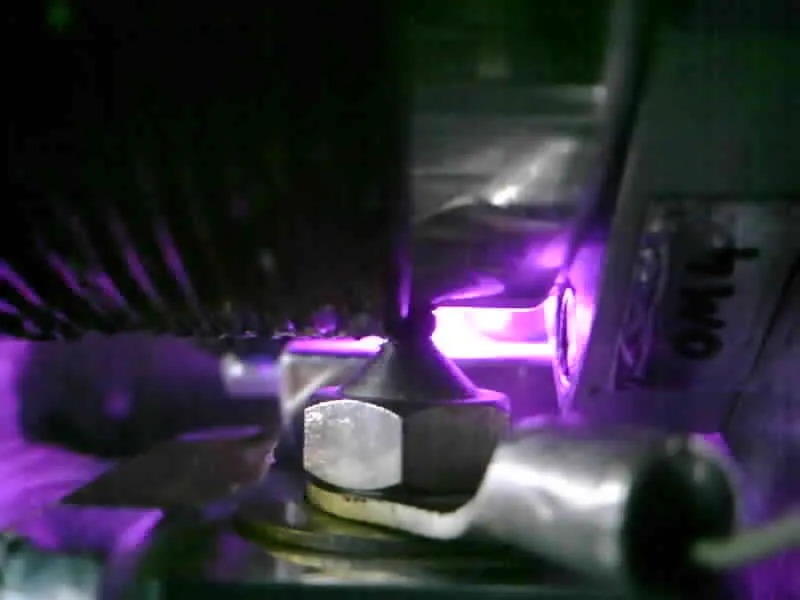
Four printers flew on the satellite. Each one extrudes resin in coils and cures it with ultraviolet light, building a cylinder a layer at a time, an arrangement the company compares to cement and water. The beam is rigid because the cured wall carries the load, not because a frame holds it.
Vacuum changes the working conditions. On the ground, the air around a fresh deposit carries heat away and the surrounding gas helps the material hold its shape while it sets. In orbit there is no air to carry anything: heat leaves by radiation, and a surface in sunlight sits next to a surface in shadow. Orbital Matter builds the wall in passes, curing each layer under the lamp before the next one goes down, so the structure is whole before it faces a temperature swing alone.
Future spacecraft are expected to grow for two reasons that arrive together: more solar area to generate power, and more radiating surface to dump the heat that power produces. Orbital data centers sharpen both. Growth collides with the rocket. Whatever flies has to fit inside a fairing, and the fairing does not grow with the mission.
“If you can build the array in space, the fairing stops being the constraint,” Jakub Stojek, the company’s chief executive and co-founder, said. He called Replicator 2 “the first proof that we can simply build the array in space, at whatever size the mission demands.”
Most large structures in orbit today leave the ground folded. Solar arrays and telescope mirrors ship as compact stacks and deploy on mechanisms, a hard engineering problem with a long record of partial failures. NASA has paid for alternatives: in 2023 it funded Redwire to print structural beams inside a vacuum chamber on the ground, work that never produced a flight demonstration. Printing in microgravity had otherwise stayed inside the pressurized hull of the International Space Station, where a printer works in air and a crew can reach it.
The flight was not clean. Two of the four printers were configured to unreel a flexible solar array, and one of them failed. The boom that did print still deployed the array. That is the part Orbital Matter treats as operational proof: a printed structure carried a load and did a job.
Robert Ihnatisin, the chief technology officer, said the redundancy was intentional. “That’s why we put so many printers on this single satellite,” he said. “We preferred to learn in orbit and adapt the software as needed rather than waste years testing every possibility on the ground.”
Resin mass sets the ceiling on length, and the mass has to be launched. Orbital Matter’s engineers put 100-meter booms within reach. SpaceX’s Starlink V2 satellites, among the highest-power mass-produced spacecraft in orbit, use solar arrays about 20 meters long.
Length and stiffness pull against each other in a printed tube. A longer boom needs more resin, and a stiffer boom needs a larger diameter, which costs more resin per meter. The company has not said which combination it expects to reach 100 meters with, or how much of the satellite’s launch mass that would take.
The company was founded in 2022 by Ihnatisin, previously at the 3D-printing company FormLabs, and Stojek. It has raised a $3 million seed round. A second demonstration mission is scheduled for 2028, carrying a larger printer on a larger satellite, with the goal of deploying an array rated at 5 kilowatts.
Replicator 2 also carried two partners into the demonstration: the European Space Agency and Thales Alenia Space, the satellite builder that worked with Orbital Matter on the spacecraft. A builder that has flown a printer once is a different customer from one reading a specification, and both partners give the company a route into programs that would otherwise start from a ground qualification campaign.
The gap between a 5-kilowatt array and a 100-kilowatt wing is the distance the program has to cover in two missions, and the company has not said how the second one is paid for.
Orbital Matter is also talking to satellite builders about licensing its printer-assisted deployment system, which would extend solar panels, antennas or other components after launch. That path asks a buyer to qualify a mechanism it cannot inspect in place, on a schedule set by someone else’s printer. Qualification is the slow part of every satellite program, and a subsystem that changes how a panel is held has to be tested against the same vibration and thermal profiles as the panel itself.
One of the four printers failed on the first flight. First demonstrations fail in exactly this way, and Orbital Matter designed for it by flying four units instead of one. The reliability record is still a single satellite with a single working printer on the task that mattered, which is thin evidence for a subsystem a builder would put on a commercial spacecraft.
None of that has been demonstrated yet.
What the mission established is narrower than the pitch and still useful. A printer survived launch, worked in vacuum, and produced a beam that held under load. What it did not establish is whether a 100-meter boom can be stiff enough to point an array, whether repeated thermal cycling across sunlight and shadow cracks the cured joints, or what a kilogram of resin costs against a kilogram of pre-built truss. Orbital Matter has not published independent measurements of the beam’s stiffness, and its own account of the result rests on a single flight where one of two task printers failed.
The economics will decide the rest. A printer earns its mass only if it replaces more structure than it weighs, and the trade shifts with every mission profile. For a 20-meter array, folding still works and has flown for years. Printing becomes interesting where the fairing runs out, and where a buyer needs a structure that can grow after launch rather than be specified before it.
source https://newsroom.seaprwire.com/press-releases/technologies/orbital-matter-printed-a-half-meter-beam-in-orbit-with-resin-mass-as-the-next-limit/